
Istanbul, Turkey
Deep Plane Facelift Turkey:
Dr. Zereyak's Technique Explained
The most anatomically advanced facelift technique — repositioning deeper facial tissues rather than pulling skin, for results that last 12–15 years. All-inclusive packages from Contact for pricing.
What is a deep plane facelift?
A deep plane facelift is a surgical facial rejuvenation technique that operates below the SMAS — the fibrous musculoaponeurotic layer connecting your skin to the deeper muscles of your face. Unlike traditional facelifts that tighten only skin, or SMAS facelifts that manipulate this layer from above, the deep plane approach releases the retaining ligaments that anchor the SMAS to the underlying facial skeleton.
The result is that the entire facial composite — skin, fat, and muscle — moves as one unified layer. There is no unnatural tension on the skin surface, no stretched appearance, and no distortion of facial expressions. The face looks younger because the tissues have been repositioned to where they were, not because the skin has been pulled tighter.
| Feature | Deep Plane | SMAS / Traditional |
|---|---|---|
| Tissue layer | Below SMAS + ligament release | Skin + SMAS surface |
| Longevity | 12–15 years | 7–10 years |
| Natural appearance | High — no skin tension | Moderate |
| Mid-face improvement | Significant | Limited |
| Nasolabial fold | Directly addressed | Minimal improvement |
| Operating time | 4–6 hours | 2–4 hours |
| Surgeon specialisation | Required — advanced technique | Standard training |
The deep plane technique requires specific surgical training and experience. In my practice, I perform deep plane facelifts as the primary technique for patients with moderate to severe facial aging — where the goal is results that will remain natural and sustained for over a decade.
When I release the zygomatic and masseteric retaining ligaments during surgery, I can feel the entire mid-face composite become mobile as a single unit. This is the moment that defines the deep plane approach — the tissues are no longer anchored to the skeleton by these ligaments, and the composite can be repositioned to where it was a decade ago. No amount of skin tightening achieves this. The ligament release is what produces the natural, three-dimensional rejuvenation that patients see in their results.
I explain to every patient during consultation that a deep plane facelift is not a more aggressive version of a standard facelift — it is a fundamentally different operation. The skin is not pulled. The deeper structures are repositioned, and the skin simply follows. This is why deep plane results look natural rather than surgical, and why they last 12–15 years rather than 7–10.[1]
[1] Rohrich RJ, Ghavami A, Lemmon JA, Brown SA. "The individualized component face lift: developing a systematic approach to facial rejuvenation." Plastic and Reconstructive Surgery, 2009;123(3):1050-1063. Long-term outcomes of deep plane techniques are also documented in Jacono AA, Ransom ER. "Patient-specific rhytidectomy: finding the angle of maximal rejuvenation." Aesthetic Surgery Journal, 2012;32(7):804-813.
— Dr. Umut Zereyak, Plastic Surgeon, Istanbul
Results
What does a deep plane facelift look like before and after?
All photographs published with written patient consent. Individual results vary. Slide each image to compare before and after.
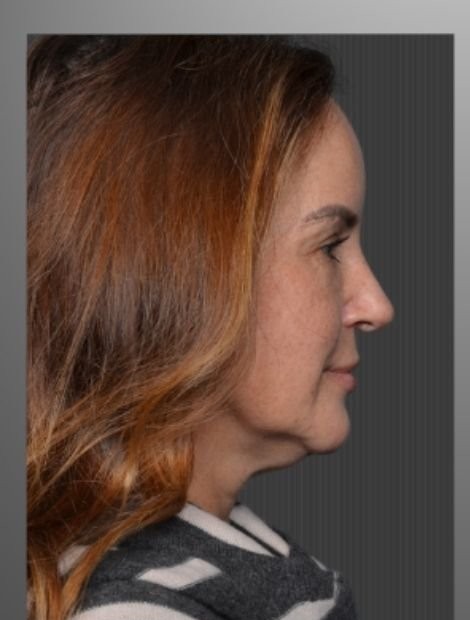 Before
  After
After Deep plane facelift + neck lift · Age 50 · USA
 Before
  After
After Deep plane facelift + neck lift · Age 49 · Bulgaria
 Before
  After
After Deep plane facelift + neck lift · Age 55 · USA
Why choose Istanbul for your deep plane facelift?
Istanbul has become one of the world's most significant destinations for facial plastic surgery — not because of price alone, but because high-volume surgical practice combined with competitive costs creates a very specific environment for skill development. Surgeons who perform hundreds of facelifts per year develop a precision that is difficult to replicate in low-volume practices, regardless of geography.
The cost differential is real and significant: an equivalent all-inclusive deep plane facelift package in Istanbul costs 60–70% less than in the United States or United Kingdom. This is driven by lower operating costs, staffing expenses, and medical facility fees — not by differences in surgical quality or safety standards.
60–70%
Less than US or UK equivalent
JCI
Accredited partner hospital
ISAPS
Internationally certified surgeon
12 mo.
Remote follow-up included
Your surgeon
Dr. Umut Zereyak
Plastic, Reconstructive & Aesthetic Surgeon · Istanbul
Dr. Zereyak specialises in facial plastic surgery with a particular focus on deep plane and composite facelift techniques. His practice is built around international patients who require a surgeon with both technical depth in advanced facelift anatomy and experience managing the logistics of surgical care for patients traveling from abroad.
- ✓Board-certified — TPCD (Turkish Society of Plastic, Reconstructive & Aesthetic Surgery)
- ✓ISAPS member — verify at isaps.org →
- ✓Operates exclusively at Istanbul Çamlıca Medicana Hospital
- ✓International patients: USA, UK, Australia, Europe
- ✓Free video consultation before travel commitment
From Dr. Zereyak
Is facelift possible after filler?
Dr. Zereyak addresses one of the most common questions from international patients considering deep plane facelift.
How much does a deep plane facelift cost in Turkey?
Dr. Zereyak's all-inclusive deep plane facelift packages start from Contact for pricing. This is a complete package price — there are no hidden fees added at the clinic. Everything required for your surgery and recovery in Istanbul is included.
All-inclusive package includes:
- Surgical procedure fees
- General anesthesia
- Hospital stay (1–2 nights)
- Pre-operative blood tests & medical assessment
- Post-operative compression garment
- Prescribed medications
- VIP airport & clinic transfers
- Dedicated patient coordinator
- 12 months remote follow-up
The significant cost differential compared to Western countries is driven by lower operating costs in Turkey — not by differences in surgical technique, equipment quality, or safety standards. The same deep plane procedure, performed by a surgeon with equivalent training, costs three to four times more in the United States.
What does the deep plane facelift procedure involve?
The procedure is performed under general anesthesia and takes 4–6 hours depending on the extent of surgery and whether combination procedures (neck lift, blepharoplasty, fat grafting) are included.
Incision placement
Incisions are made along the hairline, curving naturally around and behind the ear. In female patients, incisions are hidden within the hair. In male patients, the beard-line anatomy requires specific planning — the hairline and sideburn position are carefully preserved.
SMAS access and ligament release
The deep plane is entered below the SMAS layer. The key retaining ligaments — zygomatic, masseteric, and mandibular ligament — are released under direct vision. The zygomatic ligament release allows the malar fat pad to be elevated, directly correcting the nasolabial fold. The mandibular ligament release addresses jowl formation at its anatomical origin. This is the technical step that separates deep plane surgery from all other facelift techniques and requires specific experience with facial anatomy at this depth.
Composite tissue repositioning
The unified flap of skin, fat, and SMAS is repositioned superiorly and slightly posteriorly. Because there is no tension on the skin itself, the result is a natural elevation — not a stretched appearance. Excess skin is removed conservatively.
Neck and platysma treatment
In most patients, the neck is treated simultaneously. Platysmaplasty — tightening of the platysma muscle through a small submental incision — addresses the neck bands and redefines the jawline and submental angle.
Closure and recovery begins
Layered closure with fine dissolvable sutures. You are transferred to your hospital room for 1–2 nights of monitored recovery before moving to your hotel with patient coordinator support.
In my experience with over 500 deep plane procedures, Step 2 — the ligament release — is where outcomes are determined. A surgeon who is not comfortable working at this depth of the facial anatomy cannot perform a true deep plane facelift. I spend the majority of operating time in this phase, identifying each ligament under direct vision before releasing it. There are no shortcuts at this level of the anatomy.
— Dr. Umut Zereyak
Areas addressed
- Mid-face and cheek descent
- Nasolabial folds (smile lines)
- Jowls and jawline definition
- Neck laxity and platysmal banding
- Lower eyelid-cheek junction (when combined with blepharoplasty)
Where can I learn more about deep plane facelift?
What is deep plane facelift recovery like in Turkey?
Recovery from a deep plane facelift is more extensive than from a mini facelift or SMAS facelift, reflecting the deeper tissue work involved. The timeline below is based on Dr. Zereyak's post-operative protocol for international patients.
Hospital and hotel
Significant swelling and bruising, which is expected. Head elevation required at all times. Pain is managed with prescribed medication — most patients describe discomfort rather than severe pain.
Partial suture removal
Partial sutures are removed at Dr. Zereyak's clinic — all sutures used are dissolvable. Swelling has typically reduced 50–70% by this point. Most patients feel comfortable moving around Istanbul independently.
Social presentability
Most patients feel confident leaving the hotel without obvious signs of surgery. Residual swelling remains but is generally concealable. Most international patients fly home after 5–7 days in Istanbul.
Near-normal function
Majority of swelling resolved. Light exercise can resume. Facial sensation fully returned for most patients. Final contours beginning to settle.
Contours settling
Final facial shape becoming visible. Scars fading significantly. Most patients feel comfortable in social and professional settings without self-consciousness.
Final result
Complete resolution of all swelling. Scars fully matured and minimally visible. This is the final result that will be sustained for 12–15 years.
What are the risks of deep plane facelift surgery?
All surgical procedures carry risk. For deep plane facelift, the following risks exist and are discussed in full during your pre-operative consultation:
- Hematoma — collection of blood under the skin, occurring in approximately 1–3% of cases. Managed with drainage if required.
- Temporary nerve changes — transient numbness or altered sensation in the face and scalp, typically resolving within 3–6 months. Permanent nerve injury is rare.
- Infection — rare with sterile technique; managed with antibiotics if occurs.
- Scarring — incisions are placed in natural creases and the hairline. Hypertrophic scarring is uncommon and responsive to treatment.
- Asymmetry — minor asymmetries may occur during healing. Significant asymmetry requiring revision is rare.
- Anesthesia risks — standard general anesthesia risks, assessed pre-operatively.
I discuss every one of these risks directly with my patients at consultation. In my practice, the most common complication requiring intervention is hematoma, which occurs in approximately 2% of cases and is managed with drainage — typically within the first 24 hours while the patient is still in hospital care. I believe a surgeon who minimises risks during consultation is not being honest with their patient. Surgery carries risk; what matters is how that risk is managed.
— Dr. Umut Zereyak
Patients can reduce their risk by following pre-operative instructions precisely: stopping smoking minimum 4 weeks before surgery, discontinuing aspirin and blood thinners as instructed, and maintaining stable weight in the months before surgery.
How to verify your deep plane facelift surgeon in Turkey
The most important decision in any facelift surgery is surgeon selection. Deep plane facelifts require specific training that is not part of standard plastic surgery board certification — relatively few plastic surgeons perform this technique routinely, as it requires advanced fellowship-level training in facial anatomy and ligament release. Before committing to any surgeon in Turkey, verify the following independently:
Step 1
ISAPS directory
Search the surgeon's name at isaps.org. ISAPS membership requires board certification and peer review. This is the most universally recognisable credential for international patients.
Step 2
Hospital accreditation
Verify the hospital where your surgery will be performed at jointcommissioninternational.org. JCI accreditation is the international gold standard for hospital safety.
Step 3
Before and after review
Request to see before and after photographs of the surgeon's own deep plane cases — not generic stock images. Ask specifically for cases that match your age group and degree of facial aging.
Step 4
Video consultation
Any reputable surgeon will conduct a video consultation before you travel. If a surgeon is unwilling to meet with you via video call before surgery, this is a significant concern.
Common questions
What do patients ask about deep plane facelift in Turkey?
How much does a deep plane facelift cost in Turkey?
Pricing for a deep plane facelift with Dr. Zereyak in Istanbul is provided during your free video consultation, as the cost depends on the complexity of your case and any combination procedures. The all-inclusive package covers surgery, anesthesia, hospital stay, pre-operative tests, compression garment, VIP airport transfers, and 12 months of follow-up. Contact us for a personalised quote.
When can I fly home after a deep plane facelift in Turkey?
We recommend remaining in Istanbul for a minimum of 5–7 days post-surgery. This allows for partial suture removal (typically day 5) and a post-operative follow-up before your flight. Most international patients are comfortable flying after 7–10 days. Long-haul flights (over 9 hours) should be discussed individually during consultation.
What is the difference between deep plane and SMAS facelift?
A SMAS facelift tightens and repositions the superficial musculoaponeurotic system — the fibrous layer beneath the skin. A deep plane facelift releases the retaining ligaments that tether this layer to the bone, allowing the entire facial composite (skin, SMAS, and underlying fat) to be repositioned as one unit. This produces more natural results with longer longevity — typically 12–15 years versus 7–10 years for SMAS — with less tension on the skin surface.
How long does a deep plane facelift last?
Deep plane facelifts typically last 12–15 years, significantly longer than traditional SMAS facelifts (7–10 years). Longevity depends on individual factors including skin quality, lifestyle, sun exposure, and weight stability. The results are permanent in the sense that the repositioned tissues remain elevated — but natural aging continues after surgery.
What is the recovery timeline for a deep plane facelift?
Days 1–3: Significant swelling and bruising, head elevation required, rest at hotel. Day 5: Partial suture removal — dissolvable sutures are used throughout. Week 1–2: Socially presentable, most patients feel confident leaving the hotel. Month 1: Near-normal function, majority of swelling resolved. Month 3: Final facial contours settling. 6–12 months: Complete resolution of all swelling and scar maturation.
Is a deep plane facelift hard to recover from?
Recovery is more extensive than a mini facelift or SMAS facelift due to the deeper tissue plane involved. Most patients describe the first 3–5 days as uncomfortable rather than painful — we prescribe appropriate pain management. Swelling peaks at 48–72 hours then gradually improves. The majority of Dr. Zereyak's international patients feel comfortable flying home at 12–14 days post-surgery.
Who is a good candidate for a deep plane facelift?
Ideal candidates are typically aged 45–70 with moderate to severe sagging in the mid-face, jowls, and neck — where skin laxity has progressed beyond what a mini facelift can address. Good general health is essential: non-smoking or willingness to stop 4 weeks prior, no uncontrolled diabetes or hypertension, and realistic expectations about outcome. A free video consultation with Dr. Zereyak will determine whether deep plane is appropriate for your anatomy.
Who is not a good candidate for a deep plane facelift?
Active smokers (smoking must cease minimum 4 weeks before and 4 weeks after surgery), patients with uncontrolled cardiovascular disease, uncontrolled diabetes, or significant bleeding disorders. Patients on blood-thinning medications (aspirin, warfarin, certain supplements) require a medication-free period prior to surgery. Very thin skin with extensive sun damage may require a modified approach discussed at consultation.
Does a deep plane facelift look natural?
When performed correctly, a deep plane facelift produces the most natural-looking results of any facelift technique. Because the deeper tissues are repositioned rather than the skin being pulled, there is no "windswept" or overcorrected appearance. The technique preserves natural facial expressions and avoids the distortion of skin-only facelifts.
Can I have a video consultation before traveling to Istanbul?
Yes — we offer free video consultations via Zoom or Microsoft Teams for all international patients. During a 30–45 minute session, Dr. Zereyak reviews your photos, discusses your aesthetic goals, evaluates candidacy, provides a personalized quote, and answers all pre-surgical questions. Most international patients complete 1–2 video consultations before confirming their surgery date.
What is included in the all-inclusive deep plane facelift package?
The all-inclusive package covers: surgical procedure fees, anesthesia, hospital stay (1–2 nights), pre-operative blood tests and medical assessment, post-operative compression garment, prescribed medications, VIP airport and clinic transfers, hotel coordination assistance, a dedicated patient coordinator throughout your stay, and 12 months of remote follow-up with Dr. Zereyak's team.
What is the downside of a deep plane facelift?
The deep plane facelift is a more complex and time-intensive procedure than SMAS or mini facelift techniques, which means: longer operating time (4–6 hours), more extensive initial swelling (peaks at 48–72 hours), and a slightly longer recovery before social presentability compared to minimal-incision procedures. It also requires a surgeon with advanced fellowship-level training in facial anatomy and ligament release — relatively few plastic surgeons perform deep plane facelifts as their primary technique. The tradeoff is more natural results and significantly longer longevity.
Who is the best deep plane facelift surgeon in Turkey?
The best surgeon for your deep plane facelift depends on verifiable credentials, not marketing claims. When evaluating any surgeon in Turkey, verify three things independently: (1) ISAPS membership at isaps.org — this confirms international peer-reviewed board certification in aesthetic plastic surgery. (2) Hospital accreditation — JCI accreditation confirms safety standards equivalent to US hospitals. (3) Specific deep plane experience — ask for case volume and before/after photographs of patients with anatomy similar to yours. Dr. Zereyak is ISAPS-certified, TPCD board-certified, holds the European FEBOPRAS qualification, and performs all procedures at a JCI-accredited hospital in Istanbul.
What is the difference between a mini facelift and a deep plane facelift?
A mini facelift (also called a short-scar or S-lift) addresses mild jowling and early neck laxity through smaller incisions and limited tissue repositioning. It does not release the retaining ligaments or reposition the malar fat pad. A deep plane facelift is a full anatomical repositioning — releasing the zygomatic, masseteric, and mandibular ligaments to move the entire facial composite as one unit. Mini facelifts are appropriate for patients in their early 40s with mild aging; deep plane is the procedure of choice for moderate to significant facial aging where the nasolabial fold, jowls, and neck all require correction. Results last 3–5 years for mini facelift versus 12–15 years for deep plane.
Should I get a deep plane facelift in Istanbul or Antalya?
Istanbul is the centre of advanced plastic surgery in Turkey. The highest concentration of ISAPS-certified surgeons, JCI-accredited hospitals, and specialist facelift practices are in Istanbul. Antalya is primarily known for dental tourism and package-based cosmetic surgery — fewer surgeons there specialise specifically in deep plane technique, which requires advanced fellowship training. For a procedure as anatomically complex as deep plane facelift, we recommend choosing your surgeon based on credentials and deep plane case volume rather than city. Dr. Zereyak operates exclusively in Istanbul at a JCI-accredited hospital.
Next step
Ready to book your free deep plane facelift consultation?
Meet Dr. Zereyak via Zoom or Teams. Discuss your deep plane facelift goals, share your photos, and receive a personalised assessment and all-inclusive quote — at no cost.
All-inclusive Contact for pricing · No booking fee · Payment on arrival in Istanbul