
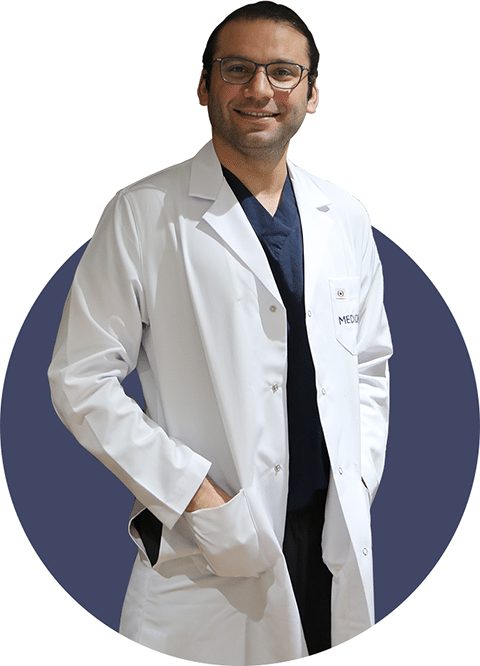
The question most American patients ask before choosing Istanbul is not simply about cost — it is about whether the cost difference is explained by a difference in quality. The honest answer requires understanding what drives surgical costs in different countries, and what credential and safety equivalence actually looks like.
— Dr. Umut Zereyak
Deep plane facelift cost: Turkey vs USA (2026)
Deep plane facelift pricing varies significantly between countries due to differences in operating costs, insurance overheads, and healthcare infrastructure. Dr. Zereyak's all-inclusive packages in Istanbul offer substantial savings compared to equivalent procedures abroad, while maintaining the same surgical standards and hospital accreditation.
All-inclusive package includes:
- Surgical procedure fees
- General anesthesia
- Hospital stay (1–2 nights)
- Pre-operative blood tests & medical assessment
- Post-operative compression garment
- Prescribed medications
- VIP airport & clinic transfers
- Dedicated patient coordinator
- 12 months remote follow-up
All packages are all-inclusive — surgery, hospital stay, transfers, and 12 months follow-up. Contact us for a personalised quote →
Why are costs so different?
The cost of any medical procedure reflects the local cost of delivering it. In the United States, the following cost components are substantially higher than in Turkey:
None of these cost differences reflect the quality of the surgical technique, the equipment used, or the outcome for the patient. The same deep plane facelift — including mandibular ligament release, nasolabial fold correction, and malar fat pad repositioning — performed with the same instruments, by a surgeon with equivalent training, costs four times more in New York than in Istanbul — because New York costs four times more to operate in.
Credential equivalence: what to verify
The relevant credential comparison for US patients is not "US board certification vs Turkish board certification" — it is whether both systems verify surgical competence through training, examination, and peer review. They do.
United States
- American Board of Plastic Surgery (ABPS) certification
- ASPS membership (American Society of Plastic Surgeons)
- State medical license
- Hospital privileges at accredited facility
Turkey (Dr. Zereyak)
- TPCD board certification (Turkish Society of Plastic Surgery)
- ISAPS membership — internationally verifiable at isaps.org
- Turkish Ministry of Health specialist registration
- Practice at JCI-accredited partner hospital
ISAPS membership is the key international verification for US patients. It requires board certification in plastic surgery and peer review — the same principle as ASPS membership. It is independently searchable at isaps.org and does not require trusting the surgeon's own claims.
Verify Dr. Zereyak's credentials independently →
Hospital quality: JCI accreditation
JCI — Joint Commission International — is the international arm of the Joint Commission, the same organisation that accredits US hospitals. JCI accreditation requires meeting the same patient safety and quality standards as US hospital accreditation. Dr. Zereyak performs all surgery at Istanbul Çamlıca Medicana Hospital, which holds JCI accreditation — verifiable independently at jointcommissioninternational.org.
The equipment in JCI-accredited Turkish hospitals is the same as in US hospitals: Bovie electrosurgery, Stryker instruments, standard anesthetic agents, modern monitoring equipment. There is no "cheaper version" of a surgical suite in a JCI-accredited facility.
The real risks of surgery in Turkey
There are genuine risks to medical tourism that US patients should understand — but they are different from the ones most commonly discussed.
- Surgeon selection: Turkey has excellent surgeons and poor-quality surgeons, as does every country. The risk is not Turkey specifically — it is choosing without verifying credentials. This risk is mitigated by the verification process described on this site.
- Recovery logistics: Recovering far from home requires planning. The minimum 5–7 day Istanbul stay, the flight home during early recovery, and the absence of your own doctor for follow-up all require management. Our team provides structured support for all of these.
- Complication management at distance: If a complication occurs after you return home, your local physician manages it. We provide full documentation and are available by video call for all post-operative concerns. Most complications are minor and manageable remotely.
- Communication: Language and cultural barriers can affect care. Our practice communicates entirely in English, with English-speaking coordinators and nursing staff. This is not a given at all Istanbul clinics — it should be verified before booking.
Who chooses Turkey for deep plane facelift?
Based on the patients in my practice, American patients who choose Istanbul are typically well-researched, financially motivated but not exclusively price-driven, and have typically had multiple consultations in their home country. They have done the credential verification. They ask specific questions about the technique, the hospital, and the follow-up process.
They are not seeking a "bargain facelift." They are seeking equivalent surgical quality at a price that reflects the actual cost of delivering care in Istanbul rather than New York.
References
- Rohrich RJ, Ghavami A, Constantine FC, et al. Lift-and-fill face lift: integrating the fat compartments. Plast Reconstr Surg. 2014;133(6):756e-767e.
- Jacono AA, Malone MH, Lavin TJ. Nonsurgical Facelift Alternatives — Comparative Effectiveness. JAMA Facial Plast Surg. 2017;19(4):283-289.
Further reading
- Deep plane facelift Turkey: full procedure guide →
- Is facelift safe in Turkey? An honest assessment →
- Cost breakdown and what's included →
- Deep plane facelift for men: technical differences →
- Secondary facelift with deep plane technique →
Start with a free video consultation
Ask all the questions you have about safety, credentials, and the surgical process. Dr. Zereyak addresses all concerns directly — no question is unreasonable before committing to surgery abroad.