
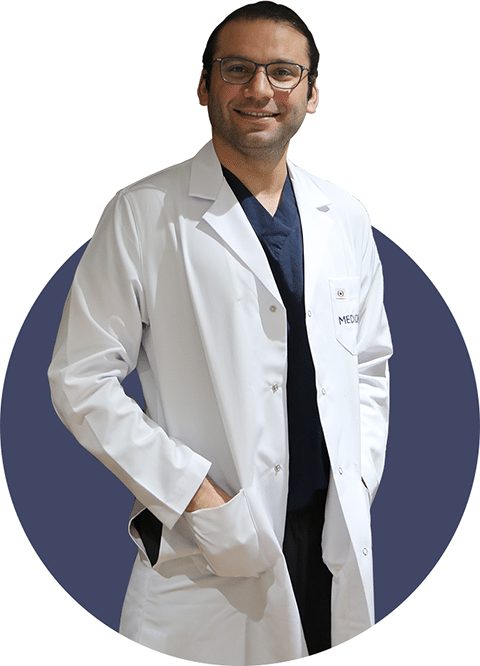
Not every patient who wants a facelift needs a deep plane facelift — and not every patient who needs a facelift is ready for one. Patient selection is arguably the most critical step in facial rejuvenation surgery. A technically perfect operation performed on the wrong candidate will produce a disappointing result. I spend more time evaluating candidacy than I spend in the operating room, because the decision made before surgery determines everything that follows.
— Dr. Umut Zereyak
What makes an ideal deep plane facelift candidate?
In my practice, the typical deep plane facelift candidate is between 45 and 70 years old, presents with moderate to severe mid-face and lower face sagging, and has realistic expectations about what surgery can achieve. But age alone is never my deciding factor — I have operated on patients in their early forties with premature facial aging and patients in their mid-seventies who were in excellent health. What matters is the combination of anatomical need, physical readiness, and psychological preparedness.
The ideal candidate typically shows descent of the malar fat pad, deepening of the nasolabial fold, jowl formation along the jawline, and early to moderate neck laxity involving the platysma muscle. These are the hallmarks of structural facial aging — the kind of aging that cannot be corrected with fillers, threads, or skin-only procedures. When I see a patient whose SMAS layer and retaining ligaments have loosened to the point where the soft tissue envelope has separated from the facial skeleton, I know a deep plane approach will produce the most natural and durable result.
Equally important is what I call "expectation alignment." I assess whether the patient understands that a deep plane facelift restores a youthful version of their own face — it does not create a different face. Patients who bring photographs of themselves from ten or fifteen years ago and say "I want to look like this again" are generally excellent candidates. Patients who bring photographs of celebrities or request features that were never part of their natural anatomy are not.
I also look for emotional stability and a clear motivation. The best surgical outcomes come from patients who are doing this for themselves, not to please a partner or respond to a life crisis. I take the time to understand the motivation behind the consultation, because this directly affects postoperative satisfaction.
How does facial anatomy influence candidacy?
Two patients of the same age can have dramatically different facial anatomy, and that anatomy is what ultimately determines which procedure — and which technique within that procedure — will produce the best result. I evaluate four anatomical domains during every consultation.
Skin quality. The condition of the skin matters, though perhaps not in the way most patients expect. Because a deep plane facelift repositions the deeper structural layers rather than simply pulling the skin, patients with moderate skin elasticity loss are actually good candidates. The skin redrapes over the lifted SMAS composite flap. However, patients with extremely thin, sun-damaged skin may have a higher risk of visible contour irregularities. In those cases, I often plan adjunctive skin resurfacing several months after the facelift to address surface-level damage.
Bone structure. A well-defined facial skeleton — prominent cheekbones, a strong mandibular angle, and adequate chin projection — provides the scaffolding that supports a lifted result. When the bony framework is deficient, particularly in the chin or midface, I may recommend a chin implant or structural fat grafting as part of the surgical plan. Fat grafting to the malar region can restore volume that has been lost from the deep fat compartments, complementing the lift achieved by releasing the retaining ligaments.
Fat distribution. The face has distinct superficial and deep fat compartments, and each ages differently. I assess the degree of malar fat pad descent, the volume of the buccal fat, and the distribution of submental fat. Patients with significant buccal fat and a full lower face may benefit from limited buccal fat reduction in combination with a deep plane lift. Patients with a hollow midface need volume restoration — usually through fat grafting — in addition to the structural lift.
Ligament laxity. The retaining ligaments of the face — the zygomatic ligament, the masseteric ligament, and the mandibular ligaments — are the structures I release during a deep plane facelift. The degree of ligament laxity tells me how much the soft tissues have descended and how much correction is possible. I assess this clinically by gently lifting the midface and jowl tissues during the physical examination and observing how much improvement is achievable with manual repositioning. This gives both me and the patient a realistic preview of the surgical outcome.
What medical conditions disqualify patients?
Patient safety is non-negotiable. There are absolute contraindications and relative contraindications, and I evaluate each case individually.
Smoking. Active smoking is the most common reason I decline to perform a deep plane facelift. Nicotine causes vasoconstriction that severely compromises the blood supply to the skin flaps. In a deep plane dissection, the skin flap is elevated over a larger area than in a traditional SMAS facelift, making adequate perfusion even more critical. I require patients to stop all nicotine products — cigarettes, vaping, patches, and nicotine gum — for a minimum of six weeks before surgery and six weeks after. I verify cessation with a urine cotinine test on the day of surgery. There are no exceptions to this rule.
Cardiovascular disease. Uncontrolled hypertension is a significant risk factor for postoperative hematoma, which is the most common serious complication of facelift surgery. I require blood pressure to be well controlled — consistently below 140/90 mmHg — for at least three months before surgery. Patients on anticoagulation therapy need to coordinate with their cardiologist for a safe discontinuation period before and after the procedure.
Diabetes. Poorly controlled diabetes impairs wound healing and increases infection risk. I require an HbA1c below 7.0% before proceeding with any elective facial surgery. Well-controlled type 2 diabetic patients can be good candidates with appropriate perioperative management.
Bleeding disorders. Any condition or medication that affects coagulation requires careful evaluation. This includes not only prescription anticoagulants but also supplements such as fish oil, vitamin E, ginkgo biloba, and certain herbal preparations. I provide every patient with a detailed list of substances to discontinue before surgery.
Body mass index. I prefer to operate on patients with a BMI below 30. Excess weight increases anaesthetic risk, impairs healing, and — importantly — affects the aesthetic result. Submental and jowl fat is more difficult to address surgically in patients with a higher BMI, and the longevity of the result may be compromised by future weight fluctuations. I advise patients who are significantly overweight to reach a stable, healthy weight before scheduling surgery.
When is a mini facelift or SMAS facelift more appropriate?
A deep plane facelift is a powerful operation, but it is not always the right operation. I recommend it only when the degree of aging justifies the extent of dissection. For patients with milder concerns, a less extensive procedure may deliver an equally satisfying result with a shorter recovery.
Mini facelift. I recommend a mini facelift — sometimes called a short-scar facelift — for patients in their late thirties to mid-forties who present with early jowl formation and mild nasolabial fold deepening but minimal neck laxity. The incision is shorter, the dissection is limited, and recovery is significantly faster. The tradeoff is that a mini facelift does not address midface descent or significant platysma banding. If a patient's primary concern is early jawline blunting, a mini facelift can be an excellent solution.
Traditional SMAS facelift. A SMAS plication or SMASectomy technique addresses the jowl and jawline effectively and can include neck work through a platysmaplasty. I consider this approach for patients who need more correction than a mini facelift provides but whose midface aging is modest. The SMAS facelift does not release the retaining ligaments or reposition the malar fat pad as a unit, so it is less effective for midface rejuvenation. However, it has a slightly shorter operating time and can be combined with fat grafting to address volume loss.
I always discuss the full range of options with patients. Some come to my clinic specifically requesting a deep plane facelift because they have read about it online, and part of my role as their surgeon is to determine whether that is genuinely the best approach for their anatomy and goals. Recommending a less extensive procedure when appropriate is not a compromise — it is good surgical judgment.
Additionally, some patients benefit from combining a facelift with complementary procedures. Upper and lower blepharoplasty can address periorbital aging that a facelift alone cannot correct. I frequently perform blepharoplasty in conjunction with deep plane facelifts, as the combination addresses the full spectrum of facial aging from the lower eyelid to the jawline and neck.
What about patients who have had filler or thread lifts?
This is a question I encounter with increasing frequency, and it requires careful evaluation. The injectable aesthetics market has grown enormously, and many patients who come to me for a deep plane facelift have a history of repeated hyaluronic acid filler treatments, and some have undergone thread lift procedures.
Dermal fillers. Hyaluronic acid fillers in the cheeks, nasolabial folds, and jawline can distort the tissue planes that I need to work within during a deep plane dissection. Large volumes of filler — particularly when accumulated over many years of repeated treatments — can migrate from the original injection site and create pockets of material in unpredictable locations. I recommend dissolving hyaluronic acid fillers with hyaluronidase at least three to six months before scheduling a deep plane facelift. This allows the tissues to return to their natural state and gives me a clear picture of the true anatomy I will be working with.
Permanent or semi-permanent fillers — such as calcium hydroxylapatite, poly-L-lactic acid, or silicone — present a more complex situation. These cannot be dissolved enzymatically and may create fibrotic tissue that complicates dissection. I evaluate these cases individually, often using ultrasound imaging to map the location and volume of residual filler material. In some cases, I may need to excise encapsulated filler deposits during the facelift procedure.
Thread lifts. Thread lifts — particularly those using barbed PDO or PLLA threads — can leave behind significant scar tissue in the subcutaneous plane and within the SMAS itself. This scarring can make dissection more difficult and increase the risk of nerve injury. I assess thread lift patients carefully, typically waiting at least twelve months after the thread procedure before considering a deep plane facelift. During that time, the threads resorb, but the fibrotic reaction they provoked may persist.
I do not view prior fillers or threads as automatic disqualifications. Many of these patients are, in fact, excellent candidates for a deep plane facelift because they have already recognized that non-surgical treatments are insufficient for their degree of aging. They simply need proper preparation and an appropriate timeline before surgery.
How do I assess international patients remotely?
A significant proportion of my practice involves patients travelling to Istanbul from abroad — from Europe, the Middle East, North America, and beyond. Because these patients cannot easily visit my clinic for an in-person consultation before committing to travel, I have developed a thorough remote assessment protocol that allows me to evaluate candidacy with confidence before the patient boards a plane.
Video consultation. Every international patient begins with a video consultation, typically lasting 30 to 45 minutes. This is not a brief screening call — it is a full consultation during which I take a detailed medical history, discuss the patient's goals and concerns, and perform a visual assessment of the face and neck. I ask the patient to position themselves in good, even lighting and guide them through specific movements — turning the head, tilting the chin up, looking down — that allow me to evaluate skin laxity, jowl severity, neck banding, and midface descent.
Photograph requirements. Before the video consultation, I ask patients to submit a standardised set of photographs: full frontal, left and right three-quarter, left and right lateral profile, and a submental (chin-up) view. These must be taken in natural light without makeup, with the hair pulled back from the face and neck. I also request a full-face photograph from five to ten years ago for comparison. These images allow me to study the anatomy at my own pace, measure proportions, and plan the surgical approach.
What I look for. In the photographs and video, I assess the same anatomical features I would evaluate in person: the depth of the nasolabial fold, the degree of jowl projection beyond the mandibular border, the presence and severity of platysma banding, malar fat pad position, and skin quality. I also note any asymmetry, prior surgical scars, or evidence of previous treatments. If I have any doubt about a patient's candidacy based on the remote assessment, I will say so honestly and either request additional information or recommend an in-person consultation before making a final surgical plan.
I confirm the final surgical plan on the day of the in-person examination in Istanbul, which takes place one day before the procedure. This allows me to verify my remote assessment findings and make any necessary adjustments.
What I tell patients during the first consultation
Honesty is the foundation of the surgeon-patient relationship. During every first consultation — whether in person or via video — I make a point of being direct. I tell patients exactly what I see, what I think is achievable, and what limitations exist.
I begin by asking the patient to describe their concerns in their own words. This is more important than it might seem. What bothers a patient most may not be the most prominent feature to a surgeon's eye, and understanding the patient's priorities helps me tailor the surgical plan to deliver the outcome that will make the greatest subjective difference to them.
I then share my own clinical assessment. I use a mirror and point out the specific anatomical changes I observe — the descent of the malar fat pad, the deepening of the nasolabial fold, the loss of jawline definition from jowl formation, the laxity of the platysma in the neck. I explain how a deep plane facelift addresses each of these by releasing the retaining ligaments and repositioning the SMAS-platysma complex as a single composite flap, rather than simply pulling the skin.
I discuss complementary procedures when relevant. If the upper or lower eyelids show significant aging, I recommend blepharoplasty. If there is volume deficiency in the temples, periorbital region, or lips, I discuss fat grafting. If the brow has descended, I may suggest a brow lift. I believe patients deserve a complete picture of what will produce the best overall result, even if that means a longer procedure and a higher cost.
Managing expectations. I always discuss the recovery timeline in detail. I explain that significant swelling and bruising are normal for the first two to three weeks, that the result continues to refine over six to twelve months, and that the final outcome is not immediate. International patients need to understand how long they should plan to stay in Istanbul and what the early postoperative period will look and feel like.
When I say no. I decline to operate when I believe surgery will not deliver what the patient is hoping for, when the medical risk is too high, or when the patient's expectations are unrealistic. This is never an easy conversation, but it is an essential one. I would rather lose a patient than perform a procedure that leads to dissatisfaction or complications. In some cases, I redirect patients to non-surgical options or to a different procedure that better matches their anatomy and goals. In others, I ask them to address a medical issue — stop smoking, control blood pressure, lose weight — and return when they are in a better position for surgery.
Approximately one in ten patients I consult with is not an appropriate candidate for a deep plane facelift at the time of their consultation. Some become candidates after preparation. Others are better served by a different approach. In every case, my goal is the same: to ensure that the patients I do operate on have the highest possible chance of an excellent, natural, long-lasting result.
References
- Rohrich RJ, Ghavami A, Constantine FC, Unger J, Mojallal A. Lift-and-fill face lift: integrating the fat compartments. Plast Reconstr Surg. 2014;133(6):756e-767e.
- Jacono AA, Parikh SS, Guthrie DG. The deep plane facelift: lessons learned over 28 years. Aesthet Surg J. 2024;44(3):NP138-NP149.
- Mendelson BC, Tuttle BM. The surgical anatomy of the retaining ligaments of the face and use in SMAS-related facelifts. Aesthetic Plast Surg. 2023;47(4):1291-1307.
- Hamra ST. The deep-plane rhytidectomy. Plast Reconstr Surg. 1990;86(1):53-61.
Further reading
- Deep Plane Facelift in Turkey — Full Guide
- Deep Plane vs SMAS Facelift Comparison
- SMAS Anatomy & Facelift Surgery
- Recovery After Deep Plane Facelift
Not sure if you're a candidate?
Send your photos for a confidential assessment. I will personally review your anatomy and let you know whether a deep plane facelift — or a different approach — is right for you.
Request a consultation